
Introduction
The growing demand for faster order fulfillment, accurate inventory management, and efficient warehouse operations has encouraged businesses to adopt advanced automation technologies. Among these innovations, Automated Picking Robots are becoming an important part of modern warehouses, distribution centers, and manufacturing facilities. These intelligent machines help businesses identify, locate, collect, and transport products with greater speed and consistency than many traditional manual processes.
As e-commerce continues to expand and customer expectations increase, companies need reliable solutions to manage large numbers of orders. Traditional picking methods often require employees to walk long distances, search through storage shelves, and manually collect individual products. These activities can consume valuable time and increase the possibility of mistakes. Automated picking robots offer a smarter approach by combining robotics, artificial intelligence, computer vision, and warehouse management software.
What Are Automated Picking Robots?
Automated picking robots are intelligent machines designed to select and retrieve products from storage areas with minimal human involvement. They use advanced sensors, cameras, robotic arms, and navigation systems to identify products and complete picking tasks.
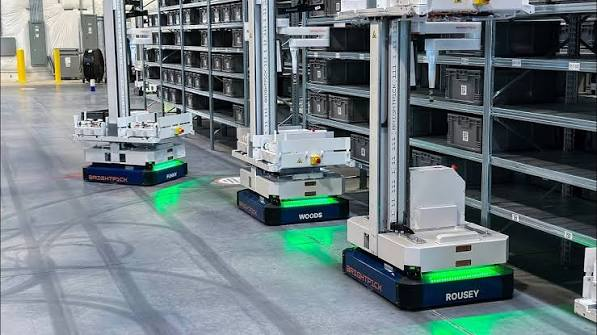
Depending on their design, these robots can move independently through warehouse aisles, collect products from shelves, organize items into containers, and deliver them to designated packing stations. Some systems are designed to handle individual products, while others transport entire storage bins or shelves.
Automated picking technology is particularly useful in facilities that process thousands of orders daily. By reducing repetitive manual activities, these systems allow employees to focus on tasks that require decision-making, quality control, and problem-solving.
How Automated Picking Robots Work
Automated picking robots operate through a combination of hardware and intelligent software. Their working process generally begins when an order enters the warehouse management system.
The system identifies the required products and sends instructions to the appropriate robot. Using digital maps, sensors, and cameras, the robot navigates through the warehouse to reach the correct storage location.
Once it arrives, the robot identifies the target product using computer vision, barcode scanning, or other recognition technologies. Depending on the system, a robotic arm or specialized gripping mechanism collects the item and places it into a container.
After completing the picking task, the robot moves the collected product to a packing station or another designated location. The system updates inventory information to maintain accurate warehouse records.
This automated process reduces unnecessary movement and helps warehouses manage orders more efficiently.
Major Benefits of Automated Picking Robots
1. Improved Warehouse Productivity
One of the biggest advantages of automated picking robots is their ability to increase operational productivity. Human workers may spend considerable time walking between shelves and searching for products. Robots can follow optimized routes and perform repetitive picking activities consistently.
Many automated systems can operate for extended periods, depending on charging requirements, maintenance schedules, and operating conditions. This allows warehouses to process more orders without relying entirely on additional manual labor.
2. Greater Picking Accuracy
Order accuracy is essential for customer satisfaction. Incorrect products, missing items, and misplaced inventory can create additional costs for businesses.
Automated picking robots use cameras, sensors, barcode scanners, and intelligent software to identify products. These technologies help reduce picking mistakes and support accurate order preparation.
Although automated systems still require proper configuration and monitoring, they can significantly improve consistency in repetitive warehouse operations.
3. Reduced Labor Pressure
Warehouse employees frequently perform physically demanding activities, including lifting, carrying, bending, and walking long distances. These repetitive tasks can contribute to fatigue and workplace injuries.
Automated picking robots can handle many of these activities, reducing physical pressure on employees. Instead of spending entire shifts collecting products, workers can supervise robotic systems, manage exceptions, inspect orders, and handle specialized tasks.
This creates opportunities for businesses to develop safer and more balanced working environments.
4. Better Inventory Management
Accurate inventory information helps businesses prevent stock shortages, overstocking, and unnecessary purchasing expenses.
Automated picking robots can communicate with warehouse management systems to record product movements and update inventory information. This allows managers to maintain better visibility into available stock and understand which products are moving quickly.
When combined with inventory tracking technologies, robotic automation can support more organized storage operations.
Different Types of Automated Picking Robots
Not every warehouse has the same requirements. Automated picking robots are available in several configurations designed for different operational environments.
Autonomous Mobile Robots
Autonomous Mobile Robots (AMRs) navigate warehouse environments independently using sensors, cameras, and mapping technology. They can transport products, containers, or shelves between different workstations.
Their flexible navigation capabilities make them suitable for warehouses where layouts and operational requirements frequently change.
Robotic Arm Picking Systems
Robotic arms are designed to identify and physically collect individual products. They can use specialized grippers, suction cups, and other tools to handle items with different shapes and sizes.
These systems are especially useful in operations involving repetitive product selection, sorting, and packaging.
Goods-to-Person Robots
Goods-to-person systems bring inventory directly to employees instead of requiring workers to travel throughout the warehouse. Robots transport storage bins, containers, or shelving units to designated picking stations.
This approach reduces walking distances and helps employees complete orders more efficiently.
Collaborative Picking Robots
Collaborative robots, commonly called cobots, are designed to work alongside human employees. They can assist with transporting products, organizing items, and supporting repetitive warehouse activities.
These systems combine human judgment with robotic consistency, making them useful for operations that require both flexibility and automation.
Industries Using Automated Picking Robots
Automated picking robots are becoming valuable across several industries because businesses increasingly depend on efficient product handling and order fulfillment.
E-commerce and Retail: Online retailers process large numbers of orders containing different products. Automated robots help collect items, organize orders, and transport products to packing stations.
Food and Beverage: Food distribution facilities use automation to handle packaged goods, organize inventory, and support efficient order preparation. Specialized systems can also work in temperature-controlled environments.
Pharmaceuticals: Pharmaceutical warehouses require accurate product identification and careful inventory handling. Automated picking technology can support traceability and reduce manual handling errors.
Manufacturing: Manufacturing facilities use robotic picking systems to collect components, supply production lines, and organize materials for assembly operations.
Third-Party Logistics: Logistics providers manage inventory for multiple businesses. Automated robots help improve storage utilization, picking efficiency, and order processing capacity.
Challenges Businesses Should Consider
Although automated picking robots offer several advantages, implementing them requires careful planning. The initial investment can be significant, particularly for businesses that need advanced robotic equipment, software integration, and warehouse modifications.
Another important consideration is system compatibility. Robots must communicate effectively with existing warehouse management systems, inventory databases, and order processing platforms.
Maintenance is also essential. Sensors, batteries, robotic arms, and navigation equipment require regular inspection to maintain reliable performance.
Additionally, employees may need training to operate, supervise, and troubleshoot automated systems. Businesses should prepare their teams for new responsibilities and provide appropriate technical support.
Understanding these challenges helps organizations select automation solutions that match their operational requirements and financial resources.
How to Choose the Right Automated Picking Robot
Selecting the right robotic system depends on several factors. Businesses should first evaluate their warehouse size, product categories, order volumes, and existing picking processes.
Product characteristics are particularly important. Small packaged items may require different picking equipment compared with large, heavy, fragile, or irregularly shaped products.
Companies should also consider navigation capabilities, picking speed, software compatibility, safety features, and maintenance requirements.
Scalability is another important factor. A suitable system should allow businesses to expand their automation capabilities as order volumes increase.
Before making a final decision, organizations should compare different technologies, request demonstrations, and evaluate the potential return on investment. Choosing a system based on actual warehouse needs can prevent unnecessary expenses and improve long-term performance.
The Future of Automated Picking Robots
The future of warehouse automation is closely connected to developments in artificial intelligence, machine learning, computer vision, and robotics. These technologies are making automated picking robots more adaptable and capable of handling complex tasks.
AI-powered systems can improve product recognition, optimize picking routes, and respond to changing warehouse conditions. Improved robotic grippers may also allow machines to handle a wider variety of products with greater precision.
Another important development is the integration of robots with smart warehouse platforms. Connected systems can share real-time information about inventory, equipment performance, and order progress.
As technology becomes more accessible, automated picking solutions are expected to attract interest from businesses of different sizes. Small and medium-sized warehouses may increasingly adopt flexible robotic systems that do not require extensive infrastructure changes.
Conclusion
Automated picking robots are transforming warehouse operations by improving productivity, supporting accurate order fulfillment, and reducing repetitive manual activities. From autonomous mobile robots to intelligent robotic arms, these technologies provide practical solutions for businesses dealing with growing inventory and order management demands.
Although implementation requires investment, employee training, and careful system integration, the long-term operational benefits can make warehouse automation a valuable business strategy. Companies that evaluate their requirements and select suitable robotic solutions can build more efficient, flexible, and competitive warehouse environments.
As artificial intelligence and robotics continue to advance, automated picking robots will play an increasingly important role in shaping the future of logistics, manufacturing, retail, and supply chain management.
